
TECHNOLOGY & DATA / SMART BUILDING & IOT
Smart building and IoT consulting for connected real estate environments.
PSGroup helps organisations connect physical environments, building systems, occupancy data and operational information to support more efficient workplaces and real estate assets. The starting point is a practical question about the building, its users or its performance, followed by the information needed to address it.
Based in Luxembourg, Properties Solutions Group brings an independent advisory perspective to workplace, IWMS, building technology, IoT and data. We help organisations define requirements, structure information and coordinate integration across European and international project environments.

From building systems to actionable data
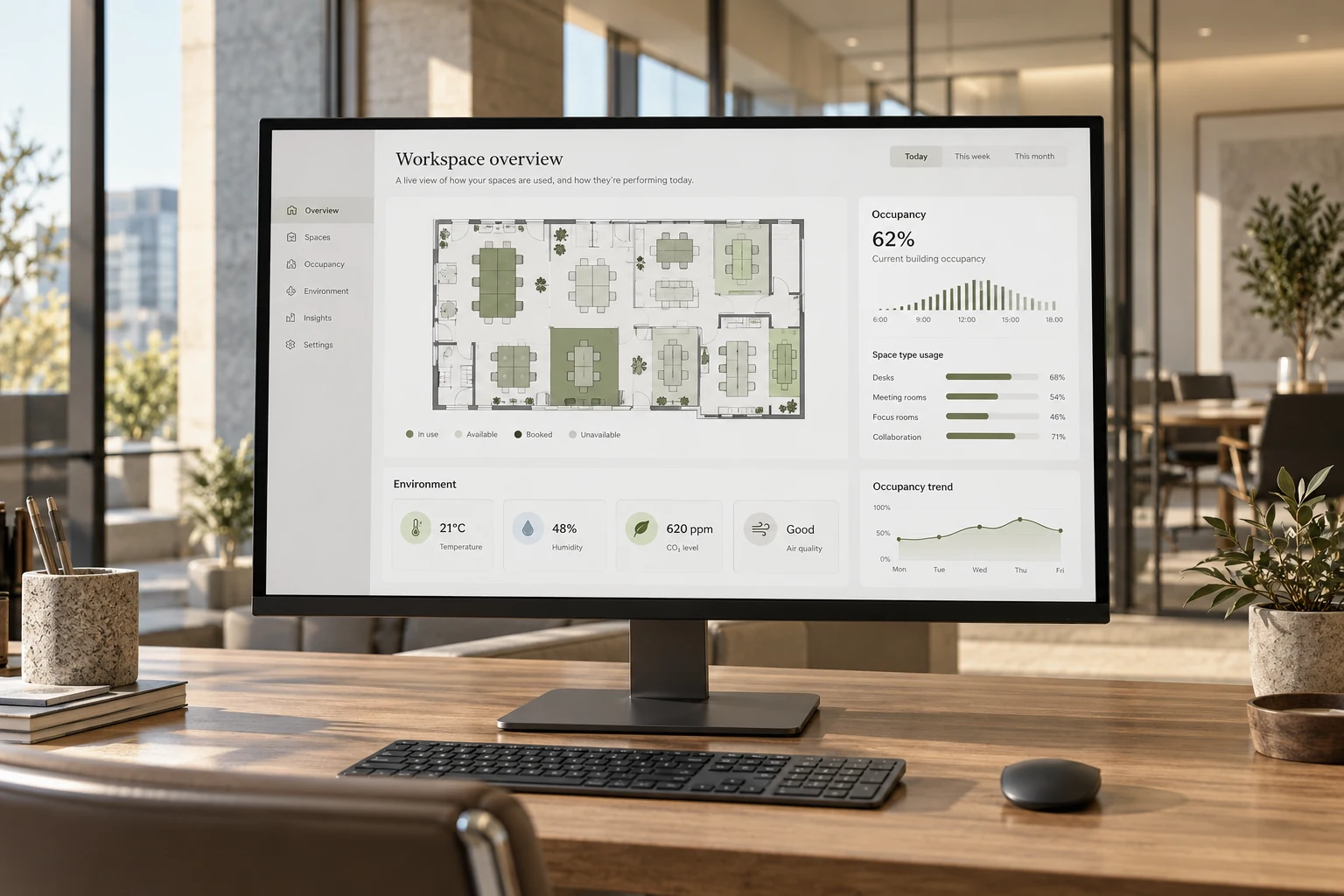
A connected building can produce information from many sources. Occupancy sensors and people counting describe the presence of users, while environmental sensors can provide information about temperature, humidity or indoor air quality. Energy and consumption data add another view of the building’s operation. Access and utilisation information may also contribute, provided its purpose, limitations and appropriate use are understood. These sources need to be considered in relation to the decision they are intended to support.
Building management systems, connected equipment and IoT platforms each bring their own identifiers, update frequencies and technical requirements. PSGroup helps clarify how the relevant sources can fit into an operational information structure. This includes identifying useful measurements, reviewing relationships with rooms and buildings, and defining the information that should reach an operational dashboard. A signal only becomes useful when its meaning and context are clear to the team using it.
The objective is to connect technology with operational and business priorities. We help distinguish information needed for workplace planning, service coordination or performance reviews from data that has no defined use. This supports a proportionate scope for integration and reporting, with the client’s building teams and technical stakeholders involved in the decisions.
Occupancy and workplace intelligence
Occupancy and utilisation describe different aspects of a workplace. Knowing that people are present in a building does not, on its own, explain which spaces they use or whether a room meets their needs. PSGroup helps organisations frame these questions before choosing indicators. Workplace planning and space optimisation can then draw on information that reflects the purpose of the space, the measurement method and the period being considered.
In hybrid working environments, patterns may vary between days, locations and types of activity. Meeting room utilisation, shared workspaces and overall capacity need to be considered alongside the employee experience. A dashboard can highlight patterns, but operational teams still need to interpret them in context. We help connect the information with workplace responsibilities and the practical questions raised by users, rather than treating a single occupancy figure as a complete assessment.
Over time, this evidence can contribute to capacity management and portfolio decisions. It can help teams examine whether space allocation, operating arrangements or further investigation should be considered. Our AI & Data approach supports the organisation and interpretation of these sources, keeping assumptions, data quality and the limits of each indicator visible.
Integration with IWMS and workplace platforms
IoT and building data gain context when they can be related to the information already used by workplace and real estate teams. A sensor location needs to correspond to a room, floor or building. A utilisation indicator needs a relevant space definition. Linking these sources to an IWMS can help connect measured activity with the records and processes used to plan, operate and maintain a portfolio.
For organisations using Archibus, PSGroup helps consider the relationship between connected information, space records and operational workflows. The integration scope depends on the environment, available interfaces and responsibilities agreed with the client. Other workplace platforms, analytics tools and real estate data may also form part of that picture. The aim is a clear flow of information with defined uses, rather than a collection of disconnected dashboards.
CAD & BIM information provides a further link to the physical building. Consistent plans and room identifiers make it easier to interpret where information originates and what it describes. PSGroup helps clarify mappings, integration rules and validation steps with the stakeholders responsible for each source. This keeps the digital view connected to the asset as it changes.
Data quality and governance
Connected buildings require reliable identifiers and consistent room and building data. If a sensor is associated with an outdated room code, its output may be technically available but operationally misleading. PSGroup helps review these relationships and the conventions used across systems. This includes the physical location of measurements, the structure of the building records and the rules used when spaces or equipment change.
Clear data ownership is equally important. Teams need to know who maintains source information, who approves changes and who can investigate a quality issue. Integration rules should explain how data is exchanged, interpreted and updated. Checks can then focus on missing records, inconsistent mappings or unexpected values, with findings assigned to the appropriate stakeholder. The organisation’s governance arrangements remain the reference for access, responsibilities and decision-making.
Quality work continues beyond the initial connection. New equipment, altered layouts and changing operational requirements can affect the information produced. We help clients consider update procedures, documentation and periodic reviews so that the information remains understandable. This creates a more dependable basis for reporting and for the workflows that use connected building data.
Independent smart building advisory
PSGroup approaches smart building projects through requirements, architecture, integration and operational value. Our role is advisory: understanding the client’s objectives, reviewing the information and systems involved, and supporting coordination between workplace, facilities and technical teams. We do not manufacture IoT hardware. Technology choices are considered against the needs of the asset and the organisation, with the relevant providers and specialists involved where required.
An independent perspective helps maintain continuity between the initial question and the information eventually delivered. We help define a practical scope, examine dependencies and support functional validation. Where a project spans buildings or countries, shared naming conventions and reporting definitions can provide a common basis while retaining the detail required by local teams. Based in Luxembourg, PSGroup supports these discussions in European and international environments with attention to the client’s existing operations.
Questions & answers
What is a smart building?
A smart building uses connected systems and structured information to support its operation and use. Sensors, building systems and operational data can help teams understand occupancy, conditions and performance when connected to clear objectives.
How can IoT improve workplace management?
IoT can provide information about presence, space utilisation and environmental conditions. This can support workplace planning, capacity reviews and service decisions, provided the measurements are reliable and interpreted in their operational context.
Can smart building data be integrated with an IWMS?
Yes. Relevant building and sensor data can be connected to an IWMS when identifiers, interfaces and integration rules are defined. PSGroup helps review the requirements, mappings and validation needed for the client’s environment.
Does PSGroup support smart building projects internationally?
Yes. Based in Luxembourg, PSGroup supports European and international project environments, coordinating requirements, building information and integration discussions with client teams and technical stakeholders.
START A CONVERSATION